Your Instructors Are Your Business
You can have the best venue, the best booking system, and the best marketing in your area. If your instructors are average, your business will be average. If your instructors are exceptional, parents will follow them through venue changes, price increases, and schedule disruptions. The instructor is the product.
That makes instructor recruitment, training, and retention the most important operational function in your business. Yet most activity providers spend more time thinking about marketing than they do about developing their team. This guide covers the full lifecycle, from finding the right people to keeping them.
Recruiting Instructors: Beyond Qualifications
Qualifications are the minimum requirement, not the hiring criteria. A Level 2 coaching qualification tells you someone passed an assessment. It does not tell you whether they can hold the attention of twelve six-year-olds, communicate with anxious parents, or stay calm when a child is sick in the pool.
What to Look For
- Energy and enthusiasm: Can they maintain high energy for multiple sessions? Do they genuinely enjoy working with children, or are they coaching as a stepping stone to something else?
- Communication skills: Can they explain a skill clearly to a four-year-old and then explain it differently to a ten-year-old? Can they speak confidently to parents?
- Adaptability: What do they do when a session plan falls apart? When equipment is missing? When three children are in tears simultaneously?
- Reliability: The best instructor in the world is useless if they cancel last minute. Ask about their availability, commitment level, and other obligations.
- Safeguarding awareness: Do they understand boundaries? Can they give you an example of a safeguarding concern they have noticed or reported?
Where to Find Them
- Your own participants: Teenagers and young adults who have grown up in your classes already understand your culture and your activity. Many of the best instructors started as students.
- University sports departments: Sports science, education, and coaching students often need flexible, term-time work. They bring current knowledge and energy.
- Governing body job boards: Most national governing bodies (Swim England, British Gymnastics, UK Coaching) have job boards or coach finder services.
- Word of mouth: Ask your current team if they know anyone. Good instructors tend to know other good instructors.
- Social media: Local Facebook groups, Instagram posts, and LinkedIn can reach candidates who are not actively job hunting but might be interested.
The Practical Assessment
Never hire solely on interview. Always include a practical assessment where the candidate teaches a short session to a real group. Observe their interaction with children, their voice projection, their ability to scan the group, and how they handle the unexpected. A brilliant interview candidate who cannot command a room full of children is not the right hire.
Induction Programmes That Work
Throwing a new instructor into a class with a register and a "good luck" is how you lose both the instructor and your customers. A structured induction protects your quality and gives new staff the confidence to succeed.
Week One: Observation
New instructors should spend their first sessions observing experienced colleagues. Give them specific things to watch for: how the instructor manages transitions, how they handle a child who is struggling, how they communicate with parents at pick-up. Provide a simple observation template they can fill in.
Week Two: Assisted Teaching
The new instructor takes a more active role but with an experienced instructor present. They might lead the warm-up, take a small group within the class, or run a single activity while being observed. Debrief after every session.
Week Three: Supervised Solo
The new instructor runs the session while the experienced instructor observes but does not intervene unless necessary. Provide detailed feedback afterwards.
Week Four and Beyond: Independent with Check-ins
The instructor runs sessions independently with scheduled observation and feedback at regular intervals (monthly for the first three months, then termly).
Induction Content
Beyond the practical teaching progression, your induction should cover:
- Safeguarding policies and reporting procedures
- Emergency procedures (fire, first aid, missing child)
- Your behaviour management approach
- Use of your management software (AMES registers, attendance marking, parent communication)
- Session planning templates and expectations
- Communication protocols with parents
- Your brand standards and values
Ongoing CPD: Keeping Skills Current
Continuing professional development is not optional if you want to maintain quality. An instructor who stopped learning three years ago is teaching three-year-old methods.
Governing Body Courses
Most governing bodies offer progression pathways: Level 1 through Level 4 and beyond. Support your instructors in progressing by covering course fees or offering paid study time. The investment comes back in improved teaching quality and instructor loyalty.
In-House Training
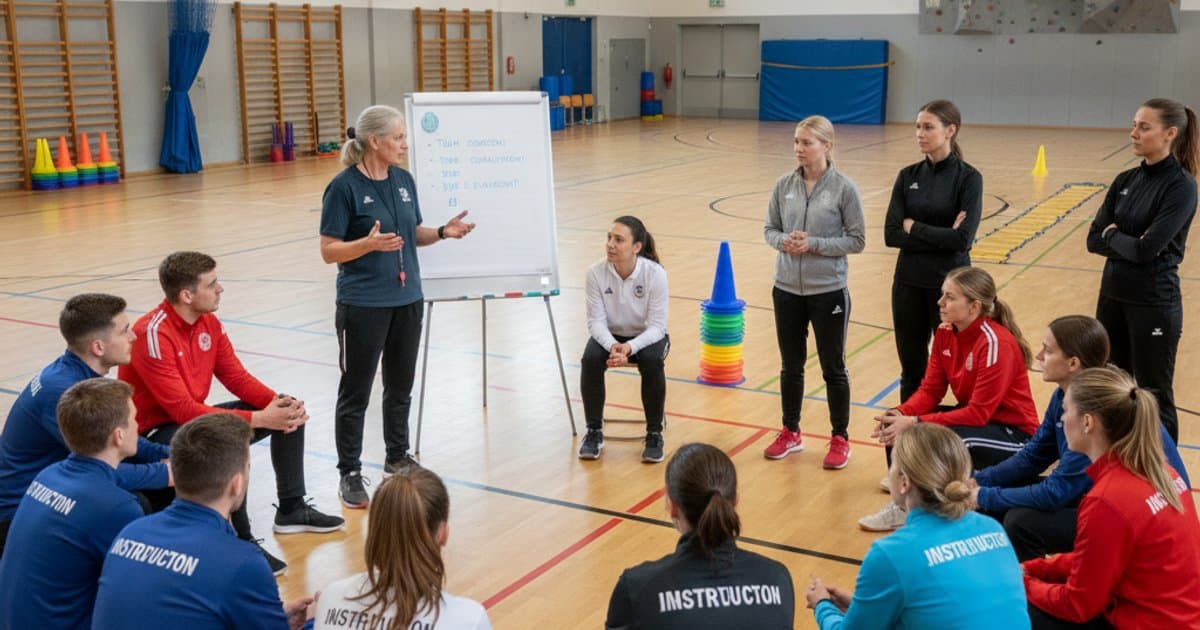
Termly in-house training sessions are highly effective and cost nothing beyond time. Topics might include:
- Behaviour management techniques (role-play scenarios)
- Adapting sessions for children with SEND
- First aid refreshers
- Sharing best practice between instructors
- Video analysis of teaching (with consent)
- Safeguarding updates and case studies
External Opportunities
Conferences, workshops, webinars, and visits to other providers all contribute to development. UK Coaching offers an extensive programme of workshops on topics from psychology to nutrition. Encourage instructors to attend and then share what they learned with the team.
Observation and Feedback Cycles
Regular observation is the backbone of quality assurance. Without it, you have no idea what actually happens in your sessions.
Structured Observation
Use a consistent observation framework so feedback is objective and comparable. Key areas to observe:
- Safety: Is the environment set up safely? Are ratios maintained? Is the instructor scanning the group?
- Engagement: Are all children active and involved? Is the pacing appropriate? Are there children standing around waiting?
- Teaching quality: Are instructions clear? Is the instructor differentiating for ability? Are they providing specific feedback to participants?
- Behaviour management: How does the instructor handle disruption? Is the tone positive? Are children treated with respect?
- Parent interaction: How does the instructor engage with parents before and after sessions?
Giving Feedback
Feedback should be timely (within 24 hours of observation), specific, and balanced. Use the EBI model: what went well (with specific examples) and even better if (with practical suggestions). Avoid vague statements. "Your behaviour management could be better" is useless. "When Jake was disrupting, you could have used proximity praise on the child next to him rather than calling Jake out in front of the group" is actionable.
Career Pathways
The number one reason good instructors leave is a lack of progression. If the only career path in your organisation is "instructor forever", your ambitious people will leave to find something with a future.
A Typical Pathway
- Assistant Instructor: Supports a lead instructor, takes small groups, develops basic skills
- Instructor: Runs sessions independently, plans and delivers programmes
- Senior Instructor: Mentors newer staff, leads training sessions, develops curriculum
- Head Coach / Programme Lead: Manages a programme area or venue, responsible for quality and development of a team
- Manager / Director: Oversees operations, business development, and strategic direction
Not everyone wants to progress into management, and that is fine. Create a pathway for people who want to stay teaching but develop their expertise: specialist roles (SEND lead instructor, competition squad coach, baby and toddler specialist) allow progression without leaving the poolside or gym floor.
Retention: Keeping Good Instructors
Replacing an instructor costs you far more than retaining one. You lose consistency, customer confidence, and the time invested in training. Here is what keeps people.
- Pay fairly: Know what competitors pay and match or exceed it. If you cannot compete on hourly rate, compete on guaranteed hours, benefits, or development opportunities.
- Communicate: Keep instructors informed about business decisions that affect them. Surprises breed resentment.
- Recognise contributions: A personal message acknowledging great work costs nothing and means everything. Instructor of the month awards, shout-outs in team meetings, and handwritten thank-you notes all work.
- Provide stability: Where possible, offer contracted hours rather than casual or zero-hours arrangements. Instructors who know they can pay their rent are happier, more loyal, and more committed.
- Listen: Regular one-to-one conversations where you genuinely listen to concerns, ideas, and frustrations build trust. Act on what you hear.
- Build community: Team socials, training days, and shared celebrations build the sense of belonging that makes people stay even when a competitor offers more money.
Actionable Takeaways
- Review your hiring process: If you are hiring on qualifications and interview alone, add a practical teaching assessment. It will transform your recruitment quality.
- Build an induction checklist: Write down every step a new instructor should complete before teaching independently. If it is not written down, it is not a process.
- Schedule observations: Book observation dates for the next term now. Diarise them. They will not happen if you leave them to chance.
- Ask your team: In your next one-to-ones, ask each instructor where they want to be in two years. If you cannot offer a path, they will find one elsewhere.